

 Whose shoes? Identity on inpatient mental health wards
By Jolie Goodman, Lived Experience Co-production Lead
Whose Shoes is an exercise on the Ward Manager Leadership Development Programme that FoNS has facilitated over the last 18 months. FoNS commenced delivery of this programme in November 2024 as part of NHS England’s Mental Health, Learning Disability and Autism (MHLDA) Inpatient Quality Transformation Programme working towards improvements in culture outlined in the co-produced Culture of Care Standards.
The Ward Manager Programme worked with 51 organisations; 186 ward managers undertook seven workshops in 12 different cohorts. FoNS co-produced all the workshops with two Lived Experience Co-production Leads in partnership with a Co-production Reference Group. The workshops’ themes included leadership, co-production, inclusion, neurodiversity and the Patient and Carers Race Equality Framework (PCREF).
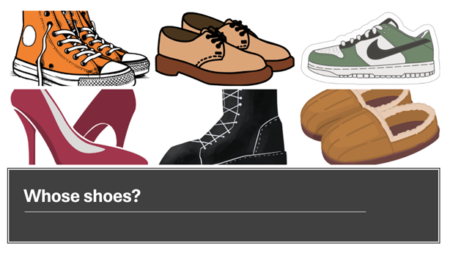
In the Whose Shoes activity, ward managers are asked think about the perspective of someone they have cared for or a member of staff by walking in their shoes. In one of the cohorts, I co-facilitated the Whose Shoes activity at the end of the first day. This prompted some amazing memories of people the ward managers had met and walked alongside. As one of the two Lived Experience Co-production Leads at FoNS, I was so struck by these that I wrote up my notes from the session, shared them with the cohort at a later session and obtained their permission to turn these into a blog.
In this piece I focus on five of the memories. They have been anonymised and a few of the details changed. I reflect on what these memories made me think of.
A patient who had size five feet who insisted their shoe size was an eight. This was the size shoe they bought. This particularly resonated with me. As an inpatient, emotionally, I had lost my sense of identity and didn’t know the right fit for how things felt. I was often asked how I was feeling and couldn’t answer. When a person is out of touch with reality it does feel believable that your feet may indeed have grown. Life has and continues in the wrong sized footwear to trip us up.
A former nurse with dementia, wearing slippers, now an inpatient on a later life ward and the mixture of complexity and joy that brought to the ward. I found this very poignant. You may previously have worked on inpatient wards, perhaps been the ward manger, only to find yourself again on the ward as a patient. Your memory is poor and you don’t always know that you are no longer working on the ward. There is something about the skill needed in the team current staff to support you in what role you believe yourself to be in at any particular moment on the ward.
A patient who arrived with a great many bin bags of shoes, which the ward manager had to buy shelving for. They reflected that they had never seen so many shoes but understood how those shoes were a part of that person’s identity. I Imagined how validating it would feel to be given space to keep safe and display something that was so integral to you.
The Nikes of a person who caused a lot of disruption on arrival on the ward but who then no one wanted to leave, who everyone learnt so much from. This memory captures something of a patient’s time on an inpatient ward and how they wore the same shoes throughout. It sounds like the person was so distressed and unwell when they arrived, but as their mental health improved, they became a real resource for the staff. This to me, beautifully illustrates the provision of the type of culture of care in inpatient settings, that everyone would want to experience.
I cannot remember the shoes that I wore on the ward I was on, it was summertime so possibly baseball boots. Very vivid memories of people do stay with mental health inpatient ward managers. It was a privilege in my role on this programme as a co-facilitator to glimpse the relationships that the ward managers build with people on the wards they lead.
I feel that imagining you are walking in someone else’s’ shoes is a helpful way to attempt to understand how they are feeling and seeing the world around them.