

Nursing in the care sector: Complex, autonomous and hiding in plain sight
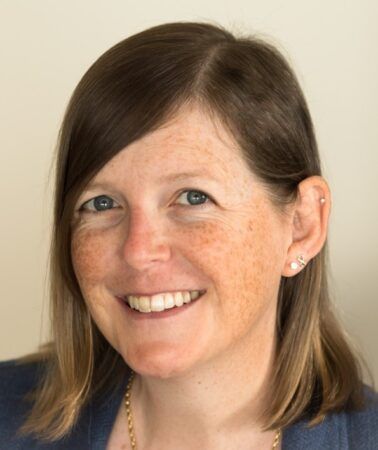
Lucy Corner, Managing Director, Cornerstone Care
When people talk about nursing, the image that often comes to mind is still rooted in hospitals. Busy wards. Visible teams. Medical staff close by. Clear hierarchies.
What is far less understood, by both the public and many nurses themselves, is the scale, complexity and professional responsibility of nursing that are evident every day in the care sector.
This lack of understanding is not neutral. It shapes career choices, confidence, professional status, commissioning decisions, and how care services are perceived and treated by wider systems. It also quietly diminishes a workforce that bears some of the greatest clinical and ethical risk in health and social care.
If we genuinely want to increase awareness of nursing in the care sector, we need to stop defining it by what it is not and start being clear about what it actually is.
Clinical autonomy is the norm, not the exception
In many care settings, the nurse is the most senior clinician on site. There is no immediate medical team, no on-call ward doctor down the corridor, and often no rapid escalation pathway beyond the nurse’s own judgement.
Care sector nurses assess deterioration, interpret subtle changes in presentation, manage long-term conditions, and make decisions about escalation or non-escalation, for which they are accountable. They often do this across whole shifts, across entire services, and sometimes across multiple settings.
This level of autonomy is not unusual in social care. It is routine. Yet this is rarely acknowledged. Instead, social care nursing is too often framed as task-based, custodial, or less clinically demanding. This misunderstanding overlooks the reality that autonomy without infrastructure increases, not reduces, professional responsibility.
Complexity that spans clinical, ethical and legal domains
Nursing in the care sector sits at a crossroads of complexity. Nurses are balancing clinical judgement with ethical decision-making, family dynamics, mental capacity assessments, risk enablement, safeguarding responsibilities, and regulatory accountability.
Alongside this, they are also navigating Care Act assessments, NHS-funded nursing care, and continuing healthcare assessments. They are contributing to or leading discussions about eligibility, funding boundaries, and responsibility for care, often while supporting individuals and families through distressing and emotionally charged decisions.
These processes are not administrative add-ons. They require detailed clinical knowledge, evidence-based judgement, and an understanding of how health and social care legislation interacts in practice. The nurse’s assessment, documentation, and professional opinion can directly influence funding decisions, placement stability, and access to services.
This is high-stakes practice, yet it is rarely recognised as such.
Decision making in conditions of uncertainty
Unlike many hospital environments, care sector nursing is often practised in conditions of uncertainty. Deterioration may be gradual and multifactorial, influenced by frailty, dementia, or long-term conditions rather than a single acute event.
Nurses make decisions where the right answer is rarely clear-cut. They must weigh clinical risk against quality of life, consider best interests, involve families with differing views, and work within the legal frameworks of consent and capacity.
Hospital admission is not always the safest or most appropriate option, yet the consequences of either escalating or not escalating carry professional and personal weight. These decisions are often made alone, without immediate peer support, and with the knowledge that they may later be scrutinised by regulators, commissioners, or legal processes.
This is not lower-risk nursing. It is complex, accountable practice in a different context.
Leadership beyond job titles
Nurses in care settings are leaders, whether or not they hold formal leadership titles. They lead teams comprising care staff, agency workers, visiting professionals, and sometimes students or newly qualified nurses.
They are responsible for setting clinical standards, modelling professional behaviour, supporting staff through emotionally demanding work, and maintaining safe care in high-pressure environments.
They also serve as the clinical link between organisations. They liaise with GPs, community teams, hospitals, commissioners, families, regulators, and inspectors. They translate clinical information across systems that do not always speak the same language.
This relational, boundary-spanning leadership is critical to safe care, yet it is rarely described as such.
Why the narrative has stayed narrow
Part of the problem is structural. Social care has historically been excluded from the dominant narratives of nursing education, leadership development, and professional identity. Student placements in care settings are often limited or poorly framed. Leadership pathways tend to centre on acute services. Professional conversations frequently reference social care without fully including those who practise within it.
Another part of the issue lies closer to home. Care-sector nurses are often pragmatic, modest, and focused on delivery. Many are exhausted by regulatory pressure and workforce shortages. There is little time or energy left to articulate the sophistication of their practice, let alone to promote it.
As a result, others fill the gap, often with outdated or inaccurate assumptions.
The hierarchy we rarely admit exists
There is another factor we need to confront if we are serious about raising awareness of social care nursing. The stigma does not come only from outside the profession. It exists within nursing itself.
Nursing has developed an unspoken hierarchy in which perceived acuity is often equated with value. Roles associated with intensive care, emergency medicine, or high-tech interventions are frequently positioned at the top. Roles associated with older people, long-term conditions, and care settings are too often placed at the bottom.
This hierarchy is rarely written down, yet it is widely felt. It shows up in how nurses talk about career progression, how students describe their placement preferences, and in the casual comments that frame social care nursing as something people move into when they step away from more demanding roles.
The irony is that this hierarchy misunderstands complexity. Acute environments often involve intense, time-limited decision-making within structured teams. Care-sector nursing involves sustained responsibility, long-term risk management, ethical judgement, and decision-making without immediate clinical backup.
Both require skill and carry risk. They are different, not better or worse.
When we position elderly care and social care nursing as lower status, we reinforce the very invisibility we then complain about. We also undermine a workforce that is managing some of the most complex clinical, legal, and ethical situations in the system.
Breaking this stigma matters. Not just for fairness, but because it shapes who enters the sector, how confident they feel, and whether they see their expertise as something worth speaking about.
Until nursing as a profession values care sector expertise as highly as it values technical acuity, awareness will continue to lag behind reality.
Visibility starts with how we talk about ourselves
If we want awareness to change, the language we use matters.
Care sector nursing should be described using the language of clinical autonomy, professional judgement, risk management, ethical decision-making, and leadership. It should be framed in terms of outcomes, responsibility, and accountability, not merely tasks or routines.
When a nurse prevents an avoidable hospital admission through skilled assessment and early intervention, that is clinical excellence. When a nurse leads a complex best-interests process, balancing family views, clinical evidence, and legal requirements, that is advanced professional practice. When a nurse supports a team through safeguarding concerns, regulatory scrutiny, and emotional strain, that is leadership.
These are not exceptions. They are everyday examples of care sector nursing.
Turning awareness into interest: practical ways to shift the dial
If we want more nurses to view social care as a credible, challenging and rewarding career choice, awareness alone is not enough. Interest grows when people can picture themselves in the role and understand the skills they would develop.
One way to do this is to reframe social care placements for students and newly qualified nurses. Instead of presenting them as observational or basic, placements should explicitly highlight clinical autonomy, decision-making, and leadership exposure. Students should be encouraged to reflect on the decisions the nurse is making, not just the tasks they are completing.
Another powerful tool is storytelling that focuses on judgement rather than sentiment. Case-based narratives that walk through a real decision, for example, managing deterioration overnight, leading a best interests meeting, or challenging a funding decision, help other nurses recognise the level of expertise involved. These stories resonate far more than generic descriptions of care.
There is also scope to make better use of peer-to-peer influence. Nurses are more likely to consider social care when they hear credible, confident peers speak positively about their work. Creating spaces for care-sector nurses to speak at conferences, contribute to journals, mentor students, or feature in professional networks helps normalise social care as a first choice rather than a fallback.
Digital platforms offer further opportunities. Short-form content that demystifies aspects of nursing care, such as explaining funded nursing care, capacity assessments, or end-of-life decision-making, can reach audiences who may never have considered this field. These do not need to be polished campaigns. Authentic, practitioner-led content is often the most effective.
Finally, leadership pathways need to be visible. Nurses are more likely to commit to a sector when progression is clear. Highlighting roles in advanced practice, consultancy, education, quality improvement, and system leadership within social care helps challenge the notion that careers plateau outside acute settings.
Education and professional spaces must reflect reality
Increasing awareness also requires structural change. Care settings must be visible and valued across nursing education, leadership programmes, and professional development pathways.
Students need meaningful exposure to social care that accurately reflects the role’s complexity. Leadership programmes must recognise care-sector nursing as a legitimate and challenging pathway, not a sideline. Research, conferences, and publications should include the voices and expertise of nurses working in care.
Representation matters. When nurses in the care sector are absent from professional spaces, the message is clear, even if unintentional.
Sharing the good news is about balance, not denial
There is no escaping the pressures facing social care. Workforce shortages, funding challenges, regulatory anxiety, and moral distress are real. Ignoring these issues helps no one.
But a constant narrative of crisis, without balance, distorts reality. It obscures innovation, resilience, and high-quality practice that exist alongside the challenges.
Across the care sector, nurses are developing new models of care, integrating digital systems, embedding reflective practice, leading quality improvement, and fostering cultures that support both safety and compassion. These stories rarely reach beyond individual organisations, yet they are shaping the future of care.
Sharing them is not spin. It is an accurate reflection of professional capability.
Public understanding will follow professional confidence
The public generally trusts nurses, but their understanding of where and how nurses work is limited. Care settings are often viewed through a social rather than a clinical lens, obscuring the professional expertise involved.
Public perception is shaped by how professions present themselves. If care-sector nursing is framed as lesser or peripheral, that is what the public will believe. If it is described confidently as skilled, autonomous, and essential, understanding will follow.
Care nursing needs to be part of the public story of nursing, not a footnote.
A collective responsibility
Increasing awareness of nursing in the care sector is not the responsibility of individual nurses alone. It is a shared responsibility across education, regulation, commissioning, leadership, and professional bodies.
Those of us working in the sector also have a role. We can speak clearly about our practice, mentor and support others to see social care as a positive and challenging career choice, and contribute to professional conversations rather than sit outside them.
The care sector’s nursing has been hiding in plain sight for too long.
It is time we described it properly.