

Framework for preparedness
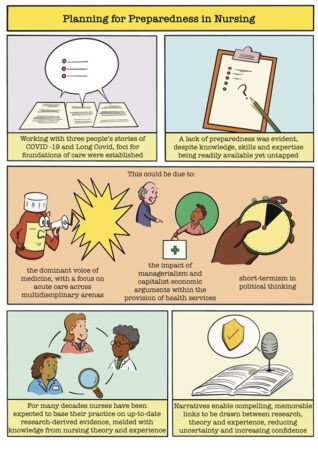
Although the work focussed on Long Covid as we reflected on the findings and our experiences of the pandemic we were reminded about the intense feelings of uncertainty that stood out. This made us realise that there was more to offer and so we designed this framework for preparedness to help nursing be better prepared for future pandemics, uncertain events or when new diseases emerged for which care was uncertain. We’re still refining this framework so we’d like to hear any thoughts you have on this. You can email them to Andrée at [email protected]
1. Building confidence and competence to work within uncertain circumstances by:
- drawing on, and adapting knowledge and skills used in other situations
- networking and sharing knowledge with others
- building and sharing an evidence base for practice
2. Building and sustaining relationships through:
- recognition and understanding of the ‘condition’
- making comprehensive, ongoing assessments of physical, mental and social well being
- acting as a point of contact and referral
3. The nature of the consultation and ongoing support – person-centred style and service navigation and co-ordination
4. Support and service navigation – for patients/carers/family/professionals
5. Symptom identification, management and prevention e.g. types of assessments, referrals, monitoring, symptom diaries and related advice, using alternative services – e.g. social prescribing, pacing of advice, treatments and referrals
6. Information giving/ referrals in relation to varied contexts e.g. work, family support (may including safeguarding for instance), referral to Occupational Therapists for home adaptations and extra care, self-help approaches e.g. pacing activities and rest, and mental health support (e.g. around uncertainty, loss of role/identity, comprehending trauma)
7. Liaising with services – ongoing, follow-up/re-referral
8. Financial support advice and monitoring and referral
9. Coaching and orientation to empower decision making, self-management (e.g. patient activation techniques) and living well with changed circumstances – adjusting to a new ‘normal’ and integrating illness/ recovery into everyday life
10. Promoting cross-disciplinary planning, review and policy development.